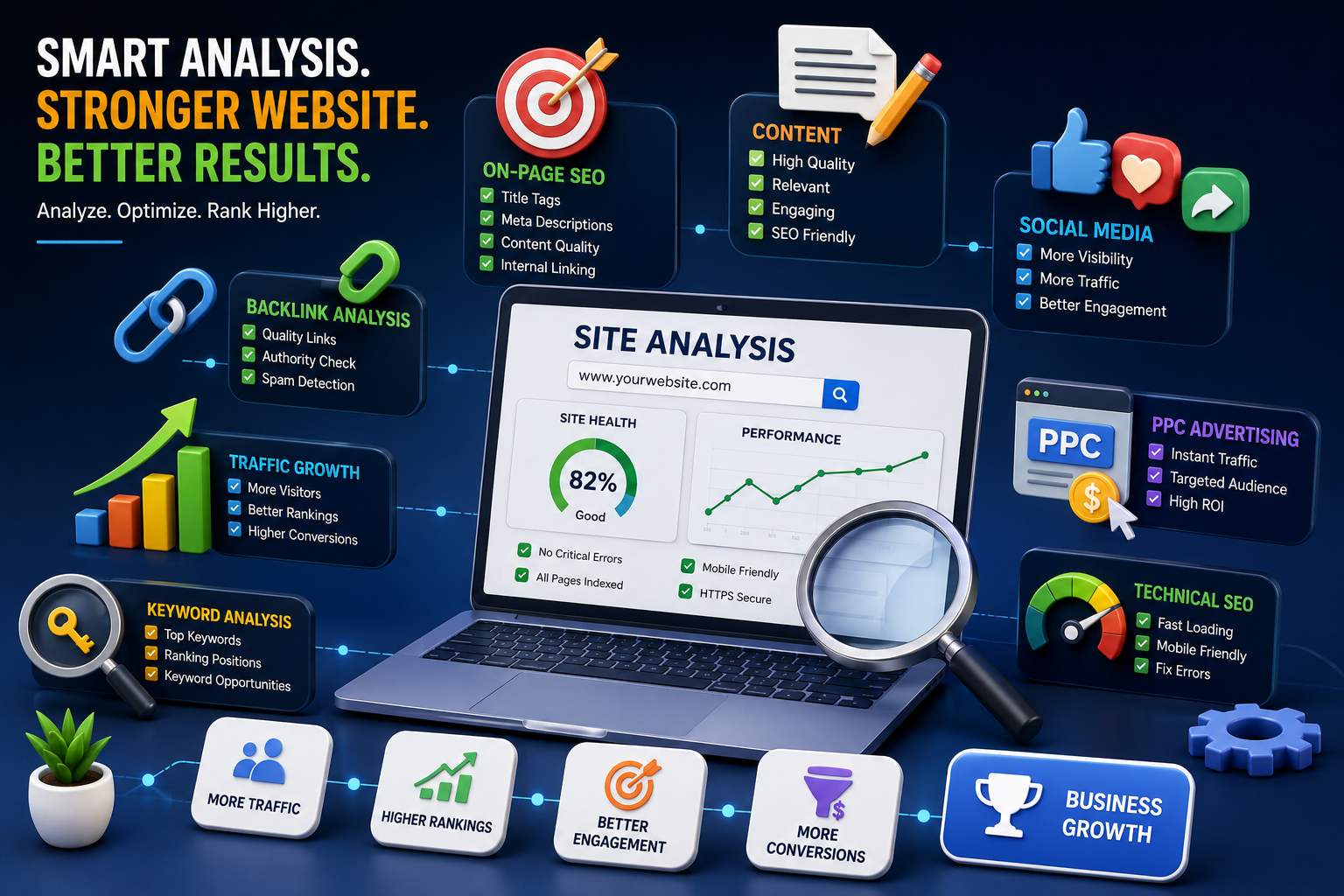
Launching a website is an exciting milestone. You invest time, effort, and resources to build something meaningful. But here’s the reality—just going live doesn’t guarantee traffic or success. That’s where site analysis online becomes crucial.
Most websites take 2–3 months before they start gaining traction in search engines. During this time, search engine crawlers evaluate your site’s structure, content, and relevance. If your website isn’t optimized properly, it may struggle to rank—even if your content is great.
This is why businesses today rely on advanced free seo tools to monitor performance and improve visibility.
Let’s break it down simply:
- A website without analysis is like driving without a map
- Without optimization, your site may never reach its audience
- Without insights, growth becomes guesswork
Industry Insight:
Websites that actively use site analysis tools see up to 60% faster ranking improvements compared to those that don’t.
Using platforms like siteanalysis tool, you can identify issues, improve SEO, and ensure your website performs at its best.
In this guide, we’ll explore the essential services provided by site analysis tools and how they can transform your website into a high-performing asset.
Understanding Site Analysis Online Services
Site analysis online services provide a complete overview of your website’s health.
They evaluate:
- SEO performance
- Content quality
- Technical issues
- User experience
Why These Services Matter
- Help identify weaknesses
- Improve search engine rankings
- Enhance user experience
- Increase traffic and conversions
Real Data Insight
Businesses using regular site analysis tools report:
- 50% increase in organic traffic
- 35% improvement in user engagement
- Faster indexing by search engines
On-Page SEO: The Foundation of Website Optimization
On-page SEO is one of the most important services offered by site analysis providers.
What On-Page SEO Includes
- Title tag optimization
- Meta description improvement
- Content optimization
- Internal linking
Why It Matters
On-page SEO ensures your website is aligned with search engine guidelines.
Key Areas to Focus On
- Relevance of content
- Keyword placement
- Content readability
- Proper structure
Example
A business optimized its on-page SEO using site analysis tools:
- Rankings improved within 60 days
- Traffic increased by 80%
- Bounce rate reduced significantly
Content Optimization: Keeping Visitors Engaged
Content is what keeps users on your website.
What Makes Content Effective
- Relevant to user intent
- Clear and easy to read
- Informative and engaging
Common Mistakes
- Writing off-topic content
- Poor grammar
- Overloading keywords
Why Content Matters
Stat:
Websites with high-quality content see 3x more engagement than poorly written pages.
Social Media Integration: Expanding Your Reach
Social media plays a huge role in driving traffic.
Benefits of Social Media Integration
- Increases visibility
- Drives targeted traffic
- Builds brand trust
How Site Analysis Helps
- Identifies best-performing channels
- Tracks engagement metrics
- Suggests improvements
Real Example
A startup used social media strategies with SEO tools:
- Traffic increased by 120%
- Engagement doubled within 3 months
PPC Advertising: Instant Traffic Growth
Pay Per Click (PPC) is a paid strategy to drive traffic quickly.
How PPC Works
- You pay for each click
- Ads appear on search engines
- Targeted audience visits your site
Benefits
- Instant traffic
- High targeting accuracy
- Measurable results
Insight:
Businesses using PPC see results within 24–48 hours.
Backlink Analysis: Building Authority
Backlinks are one of the strongest ranking factors.
Why Backlinks Matter
- Improve domain authority
- Increase credibility
- Boost rankings
Best Practices
- Focus on high-quality links
- Avoid spammy backlinks
- Build relationships with trusted websites
Technical SEO: Fixing Hidden Problems
Key Factors
- Page speed
- Mobile responsiveness
- Secure HTTPS
Why It Matters
Technical SEO ensures your website runs smoothly and ranks better.
Introducing the Tertiary Keyword Naturally
To identify deeper issues and improve performance, using a reliable seo checker helps detect errors, optimize content, and enhance SEO strategies effectively.
Actionable Steps to Improve Website Performance
Step-by-Step Plan
- Use site analysis online tools
- Optimize on-page SEO
- Improve content quality
- Build backlinks
- Monitor performance regularly
Case Study: Real Website Growth
A small business used site analysis services:
- Traffic increased by 140% in 6 months
- Leads improved by 50%
- Ranking improved for multiple keywords
FAQs (Featured Snippet Optimized)
What is site analysis online?
Site analysis online is the process of evaluating a website’s performance, SEO, and user experience using tools. It helps identify issues and improve rankings.
How to improve website using SEO tools?
Use SEO tools to analyze keywords, fix technical issues, and optimize content. Regular audits ensure better performance and rankings.
Best way to use an SEO checker?
Run regular checks, analyze reports, and fix issues like broken links, slow speed, and poor keyword usage to improve your website.
Conclusion: Build a Website That Grows Consistently
Creating a website is just the first step—maintaining and improving it is what leads to success.
With:
- Reliable site analysis online tools
- Smart use of seo tools
- Continuous optimization
You can build a website that attracts, engages, and converts users effectively.